
Understanding the Jeff Cooper Color Code System
I rely on the Jeff Cooper Color Code System as a practical way to stay aware of my surroundings without living in fear. Over the years, I have learned that situational awareness often determines whether I avoid danger or walk directly into it. Because of that, I constantly work to stay mentally engaged with the world around me.
This system provides me with a framework to recognize threats early. In addition, it reminds me to think ahead before a situation turns dangerous. I do not treat the system as paranoid. Instead, I use it as a mindset that keeps me alert, calm, and prepared.
According to US LawShield, preparation and understanding self-defense laws remain critical parts of responsible personal protection. Likewise, awareness often gives people time to avoid violence altogether.
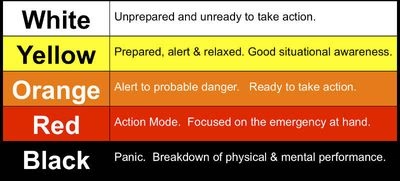
Condition White: Completely Unaware
When I enter condition white, I stop paying attention to my surroundings. Unfortunately, many people live in this state daily. I often notice individuals staring at phones, wearing headphones, or focusing entirely on distractions while walking through parking lots or stores.
Predators look for easy targets. Therefore, distraction creates opportunity.
I avoid condition white whenever I am in public. Instead, I keep my head up and scan entrances, exits, and nearby people. I do not obsess over danger, but I stay mentally present. That habit alone significantly improves my safety.
Condition Yellow: Relaxed Awareness
Condition yellow represents my normal state in public. I stay calm, yet observant. In this condition, I pay attention to behavior, movement, and anything unusual in the environment.
For example, I notice who enters a gas station after me. I look for blocked exits or suspicious behavior in parking lots. However, I continue living normally without fear or panic.
I have found that condition yellow gives me more time to react if trouble develops. More importantly, it often allows me to avoid dangerous situations entirely.
For additional training resources on personal protection and legal self-defense, I often review USCCA materials and legal education articles from the US LawShield Blog.
Jeff Cooper Color Code System and Condition Orange
When something feels wrong, I move mentally into condition orange. At this stage, I identify a potential threat and focus on it directly.
That does not mean I immediately assume criminal intent. Instead, I ask myself important questions.
Does this person appear aggressive?
Are they moving closer intentionally?
Do they seem focused on me?
Can I leave safely?
At this point, I begin preparing possible responses. I may reposition myself, create distance, or identify cover and exits. In many cases, awareness and action prevent violence before it occurs.
I believe condition orange remains one of the most important parts of the system because it bridges awareness and action.
Condition Red: Immediate Action
Condition red occurs when the threat becomes immediate. At that moment, hesitation can become dangerous.
If I reach condition red, I must act decisively. Depending on the situation, that action could involve escaping, seeking cover, protecting family members, or defending myself legally.
I never view force lightly. However, I understand that violent criminals often force innocent people into terrible situations with little warning.
Because of that reality, I study self-defense law carefully. I also train mentally so I can make lawful decisions under stress.
The legal side of personal defense matters just as much as physical preparation. Therefore, I recommend reviewing state-specific legal information through US LawShield Legal Resources.
The Three Biggest Challenges During a Threat
Recognizing Danger Early
I believe early recognition remains the hardest skill to master. Most threats do not begin with dramatic warning signs. Instead, they often start with subtle behavioral clues.
That is why condition yellow matters so much. The sooner I notice unusual behavior, the more options I have available.
Accepting the Threat Is Real
Many people struggle to accept that another human being intends to harm them. Unfortunately, denial wastes valuable time.
I train myself to acknowledge danger when the evidence supports it quickly. Although nobody wants confrontation, reality matters more than comfort.
Overcoming Hesitation
The final challenge involves overcoming hesitation during a life-threatening encounter. Most decent people naturally resist hurting others.
However, criminals depend on hesitation. Therefore, I mentally prepare for a crisis before it occurs. I also study lawful self-defense standards, so I understand when force becomes legally justified.
Why Situational Awareness Matters Daily
I do not use situational awareness only for extreme emergencies. Instead, I apply it during everyday activities.
I stay alert while fueling my vehicle late at night. I pay attention when entering stores. I also remain aware while driving through unfamiliar areas.
Small habits create major advantages.
In many cases, awareness helps me avoid danger completely. That outcome always remains the best possible victory.
For more personal safety articles and preparedness discussions, readers can also explore PSNC.info.