Introduction
When I first studied a person of ordinary moral firmness in self-defense, I realized how much this concept shapes real outcomes. Courts do not judge me by my emotions alone. Instead, they measure my actions against a legal standard that expects calm judgment under pressure. Therefore, understanding this principle helps me make better decisions before a crisis ever happens.
What the Legal Standard Means to Me
I view this legal concept as a benchmark. It represents how an average, reasonable person should act in the same situation. In other words, it is not about perfection. Rather, it is about sound judgment and restraint.
When I evaluate my own actions, I ask a simple question. Would a reasonable person, with average judgment, act the same way? If the answer is yes, then my actions may stand on solid legal ground. However, if the answer is no, I could face serious consequences.
For a deeper legal explanation, I often refer to sources like Cornell Law School’s Legal Information Institute:
https://www.law.cornell.edu/wex/reasonable_person
How I Apply It in Real Situations
Person of Ordinary Moral Firmness in Self-Defense Decisions
When I imagine a real threat, I focus on what I know at that moment. I do not rely on hindsight. Instead, I rely on perception and immediate judgment.
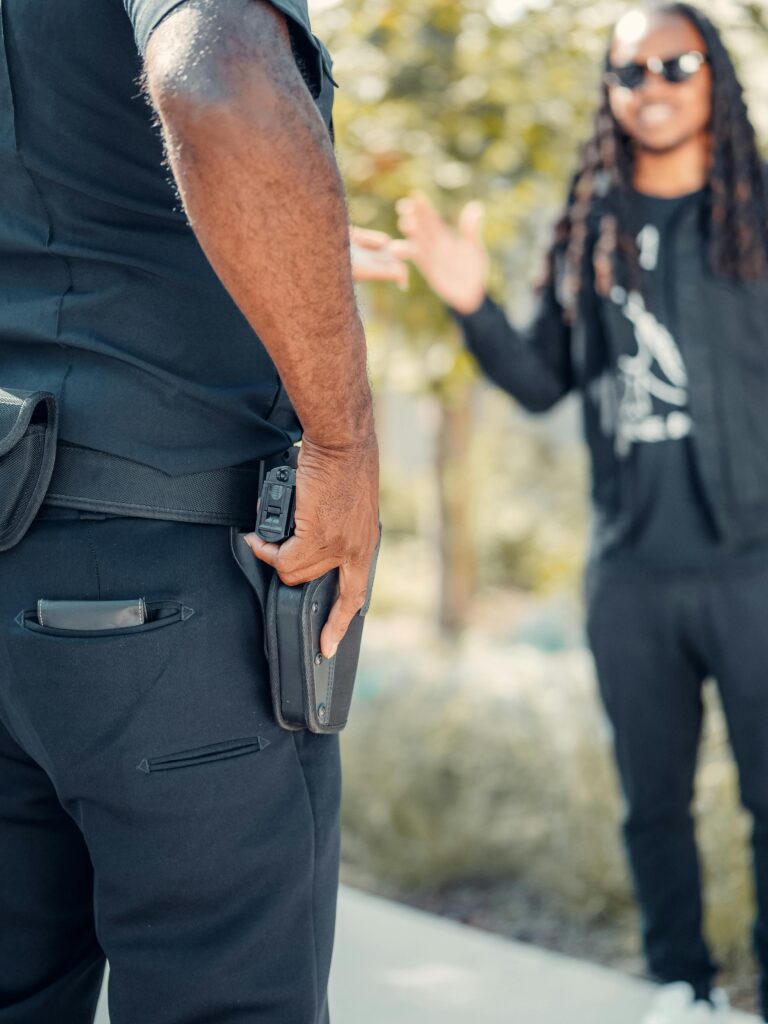
For example, if someone approaches me with a weapon and makes a clear threat, I must act quickly. In that situation, using force could be justified. However, my response still needs to match the level of danger.
On the other hand, if someone is unarmed and not aggressive, I know that using force would likely be excessive. Therefore, I must pause and assess before acting.
Why Reasonableness Matters
This standard forces me to stay disciplined. It prevents emotional reactions from taking over. In addition, it encourages me to consider alternatives such as retreat or de-escalation.
Courts often analyze several factors, including:
- The immediacy of the threat
- The level of force used
- The options available to avoid conflict
Because of this, I train myself to think clearly under stress. I also study real cases to understand how decisions are judged after the fact.
For additional perspective, I review legal summaries from trusted sources like:
https://www.justia.com/criminal/defenses/self-defense/
How I Prepare Before Anything Happens
Preparation shapes how I respond. Therefore, I do not wait until a crisis to think about these issues.
I focus on three key habits:
First, I stay aware of my surroundings.
Second, I avoid unnecessary confrontations.
Third, I mentally rehearse possible scenarios.
As a result, my reactions become more controlled and legally sound.
For more practical scenarios, I often review related insights on my own site:
https://psnc.info/personal-security-scenarios
Final Thoughts on Personal Responsibility
Understanding a person of ordinary moral firmness in self-defense gives me clarity. It reminds me that my actions will always be measured against reason, not fear alone.
Therefore, I take responsibility for my decisions. I do not rely on luck or emotion. Instead, I rely on preparation, awareness, and sound judgment.
In the end, the law expects me to act like a reasonable person. So I train myself to meet that expectation every single day.