

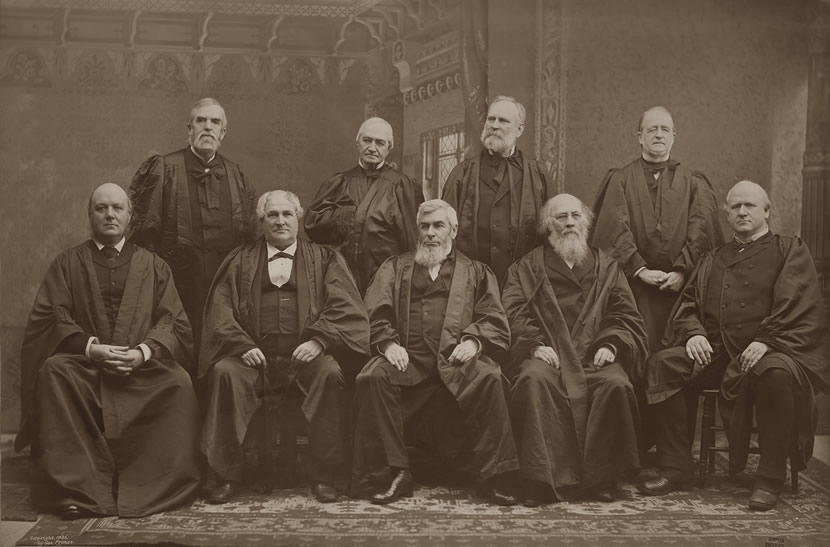
Supreme Court decision Beard v. United States,1895 (Personal Security Training)

The Supreme Court case of Beard v. United States decided in 1895, dealt with the issue of whether a person accused of a federal crime could use the “castle doctrine” as a defence. The castle doctrine is a legal principle that holds that a person has the right to use reasonable force, including deadly force, to protect their home and family from an intruder.

In Beard v. United States, the defendant, William Beard, was accused of violating federal law by selling liquor to Native Americans on an Indian reservation. Beard argued that he was justified because he acted in self-defence under the castle doctrine. He claimed that the Native Americans had threatened him and his family and that he had no choice but to defend himself and his property.

The Supreme Court rejected Beard’s argument, holding that the castle doctrine was not a valid defence in a federal criminal case. The Court stated that the castle doctrine was a common law principle that applied only to state criminal cases and did not apply to federal cases.

The Court also noted that the castle doctrine was not a blanket justification for using deadly force. Instead, the Court stated that the use of deadly force was only justified in cases where it was necessary to prevent imminent death or serious bodily harm.

The Beard v. United States decision has had significant implications for applying the castle doctrine in federal criminal cases. In general, the decision means that individuals accused of federal crimes cannot use the castle doctrine as a defence unless they can show that they were acting in self-defence to prevent imminent death or serious bodily harm.

Overall, the Supreme Court’s decision in Beard v. United States serves as an important reminder that the castle doctrine is not a blanket justification for the use of deadly force and that individuals accused of federal crimes must be able to show that they were acting in self-defence to use the castle doctrine as a defence.


Leave a Reply

Your email address will not be published. Required fields are marked *

Scott Perry's New Book

Click the Book cover to order or scan the QR Code

pst.logo-transparent
Triggernomtry Part 3 (Firing the Revolver)
Firing a revolver can be an intimidating experience, especially for those who are new to shooting. However,...
pst.logo-transparent
Revolver, the better weapon for Court Proceedings?
Revolvers have been a popular choice for personal protection and law enforcement for many decades. Despite...
pst.logo-transparent
Jeff Cooper's Safety Rules , plus a precaution when firing a revolver
A revolver is a type of firearm widely used for self-defence, hunting, and other shooting activities....
pst.logo-transparent
Never use single action in a Deadly Force Situation
In a self-defence scenario, time is of the essence, and any delay in taking action can potentially jeopardize...
pst.logo-transparent
Universal Revolver Reload Technique (URR)
Universal Revolver Reload, also known as speed strip reload or tactical reload, is a technique used to...
pst.logo-transparent
For Women- Concealed Carry Holster Ideas
Women have different physical considerations when choosing a holster for concealed carry than men. Women...
pst.logo-transparent
The Use of Force Model for Civilian Self-Defence
Self-defence is a fundamental right, and every person has the right to defend themselves when faced with...
pst.logo-transparent
Conceal Carry & Men's Business Suits
There are a few key considerations to keep in mind when it comes to wearing men’s dress clothing...
pst.logo-transparent
The revolver is still the best choice for tight spots
Crime attacks can happen at a moment’s notice and often occur at close range. In these situations,...
pst.logo-transparent
Criminal attacks are sudden--Countermeasures are an answer
Criminal attacks can happen unexpectedly, even in seemingly safe places like parking lots. To stay safe,...
[category_subcategory]