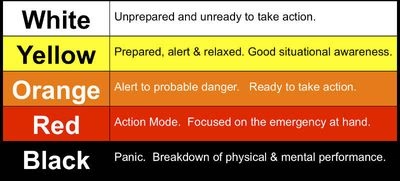
Jeff Cooper’s Color Code system is a well-known method for assessing threat levels, primarily used for situational awareness in self-defense and tactical situations. Cooper, a United States Marine, firearms instructor, and writer, developed this system to help individuals recognize and prepare for potential threats. The system is divided into four colors: white, yellow, orange, and red, each representing a different level of alertness and readiness.
- White: In this state, an individual is unprepared and unaware of their surroundings. This is often described as being “switched off” or oblivious to potential threats. People in white condition are usually engrossed in their own thoughts or distractions, like smartphones or headphones, making them easy targets for predators.
- Yellow: Condition yellow represents a state of relaxed alert. An individual in this state is calm but observant of their environment. They are not paranoid or overly anxious but are aware of their surroundings and potential threats. This state allows for early recognition of potential dangers, thus providing more time to react.
- Orange: When individuals identify a potential environmental threat or anomaly, they shift to condition orange. This heightened state of alertness involves focusing on the potential threat, determining its level of danger, and preparing for possible action. This stage is critical for decision-making, whether to avoid the threat or train for a defensive response.
- Red: In condition red, the threat is imminent or already occurring. The individual must act immediately to defend themselves. This could involve evasive maneuvers, escaping, or, if necessary and legally justified, engaging the threat directly.
Alongside these levels, there are three significant difficulties that individuals may face in such situations:
- Recognizing the Presence of a Predator in Time: This challenge involves identifying a potential threat before it becomes imminent. It requires constant vigilance and situational awareness, especially in condition yellow, to notice unusual or threatening behavior in time to take preventative action.
- Realizing That He is About to Kill You If You Don’t Stop Him: This difficulty involves accurately assessing the intent and capability of a potential threat. It requires understanding body language, situational cues, and potentially dangerous behavior, distinguishing between benign and malicious intentions.
- Overcoming Your Reluctance to Use Lethal Force: The decision to use lethal force is a significant and often the last resort. Many individuals have a natural reluctance to harm others, even in self-defense. Overcoming this hesitancy requires mental preparation, understanding self-defense laws, and, in many cases, training in using defensive tactics or weapons.
Jeff Cooper’s Color Code system emphasizes the importance of awareness and preparedness in personal safety. By understanding and applying these principles, individuals can significantly improve their ability to detect, assess, and respond to potential environmental threats.